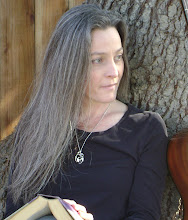
Y'all know I love music. There are some songs that are so good that they always give me the shivers. One of them is Pink Floyd's Brain Damage. Actually, a lot of Pink Floyd's music will do that to me. (I wrote Wish You Were Here into Personal Demons.) I haven't listened to Brain Damage in a really long time, but I woke up with it in my head this morning. Specifically, the line "There's someone in my head, but it's not me." The song was accompanied by a whole cast of characters who I'm just getting to know.
That's what the writing process is to me: people in my head. They start out as strangers, but little by little we get to know each other. They tell me things and have conversations with each other, and I take dictation. Some of them, I really like. Others, not so much. But whether I like them or not, I'm just the poorly paid help with the laptop, so they all get an equal crack at getting their story on the page. (I don't play favorites.)
So, I'm still hanging out with my old friends, but I'm making some new friends too. It's fun to watch these new characters emerge, and I'm dying to hear the stories they have to tell as we get comfortable with each other.
I'll leave you with a question and a song. Question: New stories come to me as characters with something to say. If you write, how do new stories come to you?
And the song: Pink Floyd's Brain Damage. As always, if you love it, please visit your chosen mode of music purchase and buy it.
So, I have officially (and probably unofficially) read Last Rite for the very last time. I finished reading through first pass pages (if you don't know what those are, you can find out here) this weekend and mailed back my last few corrections to my editor on Monday. But also, I just finished the first draft of a new project yesterday. I have two projects on totally different ends of the publishing spectrum and it made me think.
The Personal Demons trilogy started like any other project, as just an idea. Or, really just a character. (Hi Luc *waves* :p) So...that would be like an egg, if you're following my analogy here... And from that idea, grows the first draft of a whole novel, with a beginning, a middle and an end. (Think ten fingers and ten toes.)
But that novel is just a fledgling. It needs some guidance (critique input) and support (revisions) to grow into a book that can stand on its own. (This would be your toddler.)
As it starts to take its first steps into the world, we continue to support (revise) it and it slowly grows into the book we knew it could be. So, we send it into the world (high school...or, um...agents) knowing that not everyone will like it, but hoping it makes some friends. Some may think it's not refined enough. Others won't connect with it on a personal level. It may feel misunderstood and lonely. But it will find a best friend (editor) who will encourage it to be even better (editorial feedback) and support it (revisions) so it can be strong and independent. But once it's out there (on shelves) it's subject to scrutiny (reviews) and it needs to stand on its own. And, as the author/parent, we need to stand back and let it go.
Which is what I'm doing with Frannie, Luc and Gabe. I'm at the place where my heart is still with them, and I still worry about them, but they're independent and strong and I have to find it inside myself to move on and let them have their life. It's hard, and a little sad, but it's part of the cycle.
But, I've got a toddler in my brand new project that needs nurturing, and I've got a few high schoolers who are on or ready for submission, and I've got a few eggs lying around. None of them will ever take the place of Personal Demons, but just like my kids, I love them all the same.
So, I have a confession to make. I’m neurotic—sort of. I’m a perfectionist. I hate to make mistakes. Because of that, and the fact that the voices in my head never seem to shut up, I’m a compulsive reviser/editor of my manuscripts. I can pick at a manuscript forever and never be totally happy with it.
Even in Personal Demons and Original Sin, which are a done deal, there are some things I wish I could go back and change. I'll think of some witty line that would have fit perfectly and I'll kick myself. What I find is that the characters develop and flesh out this way for me, sort of one line at a time.
Because of that, I'm the kind of person who drives my lovely critique partner and truly fabulous agent nuts. I'll send them something, then like two days later, I'll send them a frantic, "Wait! I changed something!" email with a revised manuscript. If it takes my agent a week to get to something, she'll probably get at least four of those emails. She never complains (out loud) but I'm sure I'm her most annoying client.
Even when I was querying agents, I did this a few times, even though they warn you not to. The few I did it to were very gracious, and one even represents me now, so I guess it wasn't too big of a black mark =)
So, how do you decide something is good enough? When do you stick a fork in it and call it done?
I recently interviewed another author for the blog and asked her a question about how she chose her POV character (in this case a male). It made me think about how anyone chooses a POV character, or if it’s even a choice.
For me, it’s never been a matter of choosing a narrator. I don’t outline. I don’t have any clue what my books are going to be about. They all start with a character. The character pops into my head and starts telling me a story, which I type in as fast as I can. So, in reality, I don’t choose a narrator. A narrator chooses me.
I know I just admitted to having voices in my head, which makes me sound like him -->
But I'm mostly not crazy. Really. However, I don’t set daily word counts because I can only write when my characters have something to say. The stories unfold as my characters live them, just as my life unfolds as I live it.
So…this all makes it sound like I don’t even really need to be there…which is almost true. Except my characters would never take the time to actually write their stories down, so that’s where I come in. =)
So now I’m curious. For those of you who outline: You have a cast of characters. You know where your story is going. How do you choose which of your characters takes it there? How do you choose your narrator?
The book I am writing is writing itself. I've laid down 36K very keepable words in the last week. It's the equivalent of being "in the zone" to me and hasn't happed since I wrote Original Sin a year and a half ago. I've written two books in between, both of which I love, and both of which I'm proud of, but they were work. It feels really good to be back in the zone. These characters are incredibly complex and very alive to me, so I'm back to taking dictation. And they've had me in tears three times already, which doesn't happen to me often. I've only written one other book that made me cry.
So, tell me: If you write, do you have to be "in the zone" to write? Or can you make magic happen on your own?
And the Original Sin teaser!
Y'all remember that PD ended just after graduation. Frannie has a summer job, and Luc can't help hanging out there.
#OriginalSin p35 Luc: Frannie saunters over with her pad and pen in hand. “What can I get for you, sir?” she purrs.
“What I want—” I rub my foot along the outside of her thigh. “—isn’t on the menu.”
She scowls but doesn’t pull away. “Where was this an hour ago?”
“I was thinking of a cheeseburger,” I say, and fight to contain the chuckle when she rolls her eyes.
My oldest just took her first driving lesson yesterday. Here she is:
(I snapped that picture out the window on the sly, cuz she was already so nervous.)
I remember the first time I got behind the wheel of a car. I was fourteen. (I so hope my mother isn't reading this...) I like to think of myself as a fairly intelligent person, whether it's true or not. I generally pick up new skills fairly easily. By the time I was fourteen, I'd been watching my parents drive for a long time, so I was pretty sure I understood the mechanics of the whole thing. One day when my dad was at work and my mom had taken my sister somewhere, I decided to take my sister's car out for a spin. (There was a reason my dad always thought I'd be the one they'd have to bail out of jail.) So, I got behind the wheel, stuck the key in the ignition, and started the car.
So far so good.
I put the car in reverse and managed to back it out of the garage and down the driveway. Then I put it in gear and off I went. I was quite responsible for being so irresponsible, and drove very slowly, cuz, let's face it, if I crashed, my parents would find out what I'd done. Now that I think back on it, I'd be surprised if I got much over ten miles an hour. I can't remember exactly how far I went, but I'm pretty sure I just went to the end of my road and back. Whatever it was, I was sure I was doing it with the utmost skill.
I never got caught (I hope my kids aren't reading this...) so there's no big moral, EXCEPT...this:
Just because I had a basic sense of the mechanics of the whole thing, that didn't automatically make me a great driver, just like understanding the basic mechanics of what goes into a novel doesn't automatically make you a great writer.
When I decided I was going to write a book two and a half years ago, I'd read a lot (just like I'd watched my parents drive a lot) so I had a sense of what needed to go into my novel. I had a general plot (my road map) and I followed it. When I was done, I had a 120K word masterpiece. The good news, I'd written it for my daughter, never to be queried. If I'd decided to query it, just like if I'd decided to take my sister's car out onto the highway that first day, I'd have crashed and burned.
There's more to great writing than understanding the mechanics. It's the intangibles that make a story sing, such as style and voice. And, those intangibles only come with practice. When I started Personal Demons eight months after I starting that first book, I had two novels under my belt. I'd read some more in the genre I wanted to write in. I'd read Steven King's On Writing, which gave me a sense of what those intangibles were. I'd invested in a writer's conference, where I met my amazing critique partner. In short, I had more experience and was ready for highway speeds.
So, my second bit of writing advice for those of you aspiring to publication: BE PATIENT. It's so hard, I know. You're truly in love with your book and your characters. You want to share them with the world. Reality is, you'll have a much better chance of that happening if you shelve it and work on a new project. Write another, unrelated book. You'll learn some things, get up to highway speed, and, like me, when you go back to re-read your original masterpiece, you may find what you thought was a Renoir is really a finger painting. You can bring your newfound skills to that work of art and make it into the Renoir you thought you wrote. By this time you'll also have found yourself an amazing critique partner or group that you can send it off to, and they can tell you were there are still smudges in the paint. And, best part, you'll have another novel that you can turn around and do the same thing with when you're done. How can you go wrong?
Before I get off on my topic, I want to remind you all that the Spread the Word Contest in which two Original Sin ARCs are up for grabs ends tomorrow night, so don't miss your chance!
Dovetailing off of Tuesday’s post about beautiful writing versus good writing, I’d be interested to hear who some of your favorite authors are, which of their books pulled you in, and why. Loving a book has to do with a lot more than the writing style. As many of you commented Tuesday, you want to be pulled into the story.
I judge the strength of a novel by how long after I finish it I’m still thinking about it. This definitely has to do with the writing style—if I wasn’t living the story because the prose pulled me out of it, I’m not going to feel the same emotional investment. In writing circles I often hear authors say, “I’m not feeling it,” about their own work when they’re drafting. I know I’ve said that about mine. That’s when I know I’m not done revising. I think that’s really it in a nutshell. As a reader, we want to “feel it.” Whether it’s a romance or a thriller, we need to feel invested in the characters and the plot needs to feel real. If any of that is missing, the story’s not going to resonate with us.
For me, that boils down to these components:
Characters: There needs to be memorable characters who are developed in such a way as to make us care about what happens to them.
Plot arch: Said characters need to be propelled through the story by realistic events (even in a fantasy), most of which are out of their control. These events cannot feel contrived or convenient (nothing drives me more crazy) but need to flow organically. (I explored this concept in my post about critiquing.)
Stakes: I did an entire post on this a few weeks back. Something important (to the characters and the readers) needs to be at stake. This varies greatly between genres. In epic fantasy, often the fate of the world hangs in the balance. In quieter contemporaries, it can be as simple as the fate of a relationship. Either way, if an author has done their job developing the characters and the plot, we’re invested.
And, once again, writing style: Did the author get out of the way and let me live their story.
A benchmark for me is how fast I rush out for a sequel (if there is one). If I read a book, and months later, when the sequel comes out, I still care enough to go to the bookstore on release day and devour it before bed that night, I know the author has done all these things. My only examples of this so far:
Harry Potter and the Deathly Hollows by J.K. Rowling (and a few of the earlier ones)
Mockingjay by Suzanne Collins
I’ll put J.R.R. Tolkien’s Lord of the Rings in here because I couldn’t stop reading until I finished all of them, and that was in seventh grade when I still hated to read.
And the next one will be Where She Went by Gayle Forman. (Now you know where I'll be April 4th.)
What does this for you? What is it about some books that leave you thinking about them days, and sometimes even weeks after you’ve finished?
Since December, I've been writing—every waking minute and some not-so-waking minutes—but this fall I took some time off writing to read. A lot. I caught up on everything I’d been wanting to read this last year but didn’t because I was absorbed with my own characters. I found some new favorite authors and read a few lemons. But, as I was doing all this reading, I was struck with something. Some authors take a lot of words to say something very simple. This isn't meant as a criticism, but an observation.
I tend to lean toward simplicity in my writing and truly believe that the author should be invisible. Two novels I've read in the last six months where this was the case were If I Stay by Gayle Forman and Mockingjay by Suzanne Collins.
I love the way they write. Their styles, though very different, resonate with me. Simple and beautiful. Along with Jay Asher, John Green and a handful of others, they’re some of the least obtrusive writers I’ve ever read, meaning their words never distracted me from the story. And they had me crying, I don’t know, like twenty times.
That said, my favorite authors are still Melissa Marr and Kristin Cashore, who tend to be slightly more literary. I catch myself thinking about the writing while reading their books, but only enough to say to myself, holy cannoli, I wish I could write like that, and never enough to pull me out of the story. It's a very fine line.
There are some beautifully written stories out there that are sometimes too beautifully written. I know it sounds crazy, but if the prose is so beautiful that I start thinking about the prose, I’m no longer living the story. As a writer, I’m thinking that’s not such a good thing.
Am I wrong? Is there a difference between a well written story and a beautifully written story?
I got that, of course. What I didn’t get is, when you (read: I) don’t write with an outline, it’s trickier than you might think.
2. Those three books have to actually go together.
Again, obvious. I love my characters, and it’s great that I get to keep writing about them, but that means I don’t get to keep my happy ending from book one—because bliss isn’t that fun to read about. Also, I think it’s important that the entire trilogy is cohesive. I talked about the concept of cohesiveness when I posted on critiquing, but essentially, I just mean that the concepts, characters, conditions and conflict should flow smoothly throughout the series. This means you should foreshadow key events where you can even if they don’t happen until much deeper into the trilogy, and past key events should factor into everything that happens from there on out. But, again, when you don’t write with an outline, and have no idea where the story is going, this is a bit of a trick.
3. Book three has to wrap up all those loose ends.
All those cool sub-plots and character twists? This is where they come home to roost. The end of book three needs to wrap up 1200ish pages of character quirks, foreshadowing and plot twists into a tidy little package tied with ribbon. Nathan Bransford did an interesting post a while back on what happens when you leave all that mystery dangling. This is the real trick, and the reason I wish I’d had some clue how this trilogy was going to end before I started book one.
With Personal Demons and Original Sin I could leave stuff hanging. As a matter of fact, as an author, you kind of want to leave some mystery in the first books of a series. Both of those books took under two months to write and another month to revise. The Novel Formerly Known as Hellbent has been started, restarted, burned and stomped on then restarted again, and again…and again, over the course of about a year. In December, inspiration (borne of necessity since my deadline was approaching) hit and I pulled it together. After all the angst, I was euphoric. It was TheBest Novel Ever! Except, that’s not what my agent and crit partner thought. So I’m revising (More on revisions later this week.) and it’s sucking the life out of me. (Which is why I haven't been here much over the last few weeks. Sorry!) I struggled so hard with point #3 above--fitting all the pieces together just so--that it feels like my whole novel is a house of cards. If I mess with any one part, the whole thing is going to topple.
So…I’m indescribably grateful to my seriously cool editor and everyone at Tor for having enough faith in me to sign me to a three-book deal. But, I seriously need to learn to outline if I’m ever going to do this again.
Is it just me, or are the stakes going up in YA literature?
I have a fun new WIP. It’s a YA urban fantasy. It’s also the first thing I’ve ever written chronologically. But, here’s the thing…
I don’t write with an outline, so I generally don’t know where my novels are going until they get there. With this one, I’m 45k words into what will probably be a 75-80k word novel, and I can start to see where it’s headed. I love it. But I can’t help wondering if the stakes are high enough, because they're not the fate of the world.
Think of Twilight. The only true stakes in that series were whether Edward would turn Bella. Bella was the stakes.
Now, think of the next “big” series: The Hunger Games. Though the story still revolves around one girl, the stakes are much higher than just the fate of Katniss. An entire society is at risk. It seems in many of the popular series these days, there is the fate of, at minimum, groups of people at stake, and sometimes the world. In my Personal Demons series, Frannie’s decisions will impact the shape of Heaven and Hell, and therefore, Earth. High stakes.
I know this varies by sub-genre. Contemporary YA lit is obviously based in reality, where the stakes, realistically, are usually only one person or family. But in the fantasy, dystopian and science fiction sub-genres, is more expected?
So, my question to you: How big do the stakes need to be in YA books to keep teens interested? Is it a different standard for adult books?
Today is an anniversary in my writing life. It was exactly two years ago today that I sat down at my laptop, having never had any desire to write anything before in my life, and started writing a novel for my daughter.
Then I wrote another one.
And then, I wrote Personal Demons.
Moral of the story: If you think you can’t, then you can’t. If you’re too stupid to know better (like me) then you never know what might happen. Okay, so forget the stupid part, but remember the part about believing in yourself.
Thanks for all your input on choosing a project. The throwing them into a window fan suggestion was entertaining. Thanks GhostFolk (aka: Randy ) ;p
In the end, I decided to seek professional advice from my truly fabulous agent, who I trust implicitly.
While I pondered my problem (and your creative solutions) over the weekend, it occurred to me what the real source of all my angst was. Most of you who write can probably relate to this.
I wrote a book. I sent it to agents. Some really amazing agents wanted to represent THAT book. And my truly fabulous agent sold THAT book to my seriously cool editor, who loved THAT book.
THAT book.-->
I kind of felt like the all the stars had aligned and lightning struck, and my PowerBall numbers hit, and pigs flew, all at the same time with THAT book. It was like winning the lottery times ten. Like I got soooo super lucky and wrote something decent that got in front of the right people at the right time.
THAT book.
But the problem was, THAT book sold in a three-book deal. So I was supposed to be able to do THAT again. But I really wasn’t sure how I did it the first time. What was I going to do when everyone figured out how lucky I got with THAT book and that I, in fact, had no writing talent?
When I handed Original Sin (Personal Demons, book 2) off to my truly fabulous agent earlier this year, I was totally stressing, because she was going to know that I was a total fraud. And I was sure she was going to ask me who really wrote Personal Demons. (She was nice enough not to ask, but I’m sure she’s still wondering.) She helped me clean up Original Sin before I sent it off to my seriously cool editor last week, who DIDN’T HATE IT! *throws virtual confetti* I know she’s going to have a lengthy editorial letter for me, and I welcome it. She’s amazing at helping me make my book into the one I thought I wrote.
And, I’m starting to think that maybe I’m not a total fraud. Maybe…
But choosing a new project is hard for all those same reasons. I have three really cool stories that are dying to be told. That’s, like, nine characters in my head all talking at the same time (and that doesn’t even count Frannie, Luc and Gabe who are all still in there too). But I’m a little worried that, no matter what I write, if I can’t figure out how to make lightning hit and pigs fly again, it won’t matter. It’s a little bit nerve wracking.
This week marked a new chapter (both literally and figuratively) in my publishing life. I had a big red circle (because that’s what they tell us to do) around June 1. It was my first actual deadline. My manuscript for Original Sin (Personal Demons, book 2) was due to my editor. I’m happy to say, I made the deadline. Yay! *throws virtual confetti*
Truth is, I actually gave it to her a few weeks ago with the proviso that things might change and I’d have a final draft to her by June 1. Not much changed, just some clean-up, so she’s already read it and didn’t seem to hate it. Another yay!
So, now I’m working madly on Hellbent (Personal Demons, book 3), but I also have a few other projects bouncing around in my head. One of them is in a YA subgenre that’s trending right now, and I don’t really want to write to a trend, but I love the story. Another is a rewrite of an older manuscript. The writing is atrocious, but the plot, once it really gets going, is kickass. The third is a contemporary that popped into my head fully formed. I think it could be really good and it would be a pretty quick write, cuz it’s all right there, plot twists and all.
So, how do you choose what you’ll write when you have more than one idea?
Thought I'd start us off with a little music. A blast from my childhood:
That woman screaming...? Yeah, that was me...
The amazingly talented, and overall fabulous Heidi R. Kling is sponsoring Author Appreciation Week,so over the course of the week, I'll be sharing some thoughts on authors who have influenced me in one way or another. But today's post is about some of the challenges that authors face on the road to publication, such as, working under deadlines. Or in other words, all about me! O.O
I’ve got a whole lot of Personal Demons related stuff going on right now. Personal Demons copyedits showed up on Friday, and they're due back this week. I was looking forward to them, but when I saw all the RED, they scared the snot out of me—until I realized most of the red marks are for the typesetter and have nothing to do with me or my screw-ups. Whew!!
I’m also working through revisions of Original Sin (PD #2) which is very exciting. It’s seriously edgy and dark, so I was a little nervous about it, but my readers seemed to like it, so…maybe it’s okay. O_o
But then I started worrying a little about book 3, (never fear, book 3 is not the actual title O_O) because, what I found writing Original Sin is that I ended up going back and changing a few things in Personal Demons for tie-in. Original Sin is due to my editor by June 1st, so I’d like to have the first draft of book 3 done before then. That way, if something in Original Sin needs to change, I’ll still have time to do it.
See, the deal is, book 3 is the first thing I’ve ever written under contract. I’m finding it to be an interesting experience. I wrote Original Sin in November to pass the time while we were on submission with Personal Demons. But now, with deadlines for Original Sin looming, the pressure is a little different. When I wrote Personal Demons, I didn’t even have an agent, and wasn’t sure anyone but me would ever read it. With Original Sin, I knew I might be wasting my time, because if Personal Demons didn’t sell, there’d be no point in a sequel. So again, there was the likelihood that no one but me would ever read it. But now I KNOW someone other than me is going to read book 3. My seriously cool editor. And she’s going to expect it not to suck to be really good. *bites nails* So it was a little nerve-wracking that the voices in my head had stopped and I pretty much had no idea where book 3 was going. I was lost in the literary desert with no plot. And with no voices and a silent Muse, (Orlando was nervous, I think. I know he never really looks nervous, but he’s only human.) I was feeling a little screwed.
The good news is that Orlando's back. *grins*
You can tell, just from the look on his face, that he's serious about getting some work done. So that means, when I can rip my eyes away from him, I can write, cuz Frannie, Luc and Gabe are starting to have conversations in my head again. The bad news is that they’re keeping me awake at night, but that’s okay. And the really good news it that they gave me the entire plot arc for book 3 last week, so right now, they’re my BFFs. In which case, they can keep me up all they want. Sleep is over rated anyway.
So, don't feel bad about thinking to yourself, she's nuts. I know that already and I won't take offense. I'd love for all you sane people to tell me about your WIP. How does the process work for you?
So, you’re writing a book. Great! And your book has characters, probably. Cause…well, I’m not sure it’d be much of a book if it didn't. I’ll have to try that sometime—a book with no characters.
But I digress.
So you have characters. That’s good. Do your characters come to you fully formed? Do you know their names before you start, or do you write a while and try to get to know the person that shows up on your pages before you name them? Do you know their physical traits, their hobbies, their bad habits, insecurities, hopes and fears all up front? What about their personalities? Is it something you work out before you start writing? Maybe in an outline? Or is it something that evolves as you write?
That’s a lot of question marks, but I’m curious how the process works for y’all. I write so freeform that I usually have nothing when I start but a name. But it’s fun to see my characters be born and grow into a whole person on the page. And often, they turn out nothing like I might have expected. Sometimes they let me down. Sometimes they piss me off. Sometimes they make me cry. Often they make me laugh. And every once in a while they shock the hell out of me.
Agent Nathan has a timely post for me today. It’s all about waiting and how we—on the waiting end of things—have no control over the process. For some, this can be extremely nerve-racking. He talks about the “breaking point” were writers start to lose it—checking email every ten second, losing faith in their project.
I have to honestly say that I’ve not reached that point. The biggest part of that is I have a rockstar agent who keeps me in the loop—and thankfully, the loop has been encouraging so far. Another part of it is that I’m writing like a crazy person. Ideas in head. Can’t get onto paper fast enough. Don’t bother with full sentences—too slow.
But, really, I’ve thought a bit about my approach to things lately. People who know my work is on submission to editors ask how it’s going. I don’t have any definitive news, so I get the “no news is good news” comments or “the glass-is-half-full” people telling me I’ll hear soon and then my book is destined for the NYT bestseller list.
What I realized about myself through this whole process is that I’m not a glass-half-full person. But I’m not a glass-half-empty person either. I’m a “It’s half a glass of water, Stupid!” person. It is what it is. Nothing more, nothing less. No new is just no news. Not good or bad.
It’s my own damn fault, really. I know I could keep my characters in line (literally) if I wrote with an outline. And I’ll tell you one thing for sure. If I outlined this story, it certainly wouldn’t be going where it’s going, and my character definitely wouldn’t have done that.
But, I’ve learned that I just have to let it happen. Because, truly, where I thought the story was going was much more predictable and pretty darn boring.
So, what I’ve learned in all of this: I don’t necessarily have to like what my characters are doing to my book, but I’m darn well going to let them do it.
So, I have a confession to make. I’m neurotic—sort of. I’m a perfectionist. I hate to make mistakes. Because of that, and the fact that the voices in my head never seem to shut up, I’m a compulsive reviser/editor of my manuscripts. I can pick at a manuscript forever and never be totally happy with it.
I’ve been working on book two of the series for which book one is currently on submission to editors. (Did that make any sense?) Anyway, I’ve made some minor changes to book one as issues came up in book two. Mostly setting up characters or situations for a smooth dovetail between the two books. Other than that, I’ve tried to pretend the first manuscript doesn’t exist so I’ll stay the heck out of it.
So, my question to you: When do you stick a fork in your manuscript? When do you stop editing and call it done? I’ve read agent blogs that say: “when it’s perfect” but in my world, perfect doesn’t exist. I can edit out all the typos, grammatical errors, etc, but that doesn’t stop my characters from coming up with some new, really witty line that I have to add, or some really cool new scene from popping into my head in the middle of the night. When do you stop?
I’m back to writing—every waking minute and some not-so-waking minutes—but this summer I took some time off writing to read. A lot. I caught up on everything I’d been wanting to read this last year but didn’t because I was absorbed with my own characters. I found some new favorite authors and read a few lemons, but the two I still can’t get out of my head are The Hunger Games by Suzanne Collins and Thirteen Reasons Why by Jay Asher.
I love the way they write. Their styles, though very different, resonate with me. Simple and beautiful. They’re some of the least obtrusive writers I’ve ever read, meaning their words never distracted me from the story. And they had me crying, I don’t know, like twenty times.
There are some beautifully written stories out there that are sometimes too beautifully written. I know it sounds crazy, but if the prose is so beautiful that I start thinking about the prose, I’m no longer living the story. As a writer, I’m thinking that’s not such a good thing.
Am I wrong? Is there a difference between a well written story and a beautifully written story?
Managed to get 22,000 words in this week in between work, soccer games, horseback riding, volleyball practice and general survival activities. (ie: shopping, laundry, cooking, cleaning) We’ve got lots of steamy sex scenes, cheating boyfriends, murdered best friends—all the staples of a good story.
In the midst of all that, I got the standard “Where do you get your ideas?” question from a patient who is also an aspiring writer. The question made me think about the creativity and great storytelling in the books I’ve enjoyed reading and how intimidating that can be to a new writer. Because I remember being in absolute awe upon finishing a book I really loved and thinking I could NEVER come up with something like that.
My criteria for a good read has always revolved around the story being not only unforgettable, but also how well the author keeps me wondering—and wanting more. I’ve always been disappointed in a book if it was predictable. Basically, if I could have written it, I think it’s boring.
Which is why I never thought I could write a book. Because, if I wrote it, it’d be…well…boring.
That’s mostly because I’ve never considered myself to be a terribly creative person. I think of myself as pretty much common-sense-down-to-Earth. And that’s why I give so much credit to my Muse and the things he comes up with to keep me awake all night. When I go back and read my work the first time through for edits, I’m always surprised to find myself not bored. Even smiling sometimes. Who would have thunk?
So, back to the question: Where do I get my ideas? Seriously, my two novels started with the tiniest spark. A fun name popped into my head. (Dusty Lane for a cowboy and Lucifer Cain for a demon.) That’s it. Then I just took that and ran with it. No outline. No plot arc. Just me and my Muse. He figures out how to put my ‘fun name’ character into a situation that he needs to be written out of. Then we write.
The point of all of this is that everyone has a story to tell, (even me, it turns out.) and the way each of us tells it is likely to be different, and maybe even exciting to the people who didn’t write it. So, when you get that idea—no matter how small—don’t think it’s useless because it’s been done or doesn’t seem exciting enough. Take it and run with it—and trust your Muse. Because you never know how it’s going to turn out until it’s done. And maybe I—and a whole bunch of other people—would love it.
USA Today bestselling author of the New Adult A LITTLE TOO FAR series, courtesy of HarperCollins. The young adult PERSONAL DEMONS trilogy from Macmillan is available now. For questions regarding rights, please contact my omnipotent uberagent, Suzie Townsend, at New Leaf Literary & Media Representation at suzie(at)newleafliterary.com.
A LITTLE TOO HOT (ALTF #3)
When 21 yo Samantha West takes a job as an exotic dancer out of desperation, her first private client makes her want to break all the rules, but his secret will probably get her killed. Barnes & Noble,iBooks,Amazon